TORONTO, ON / ACCESS Newswire / March 13, 2026 / Canada’s real estate development sector is facing a challenge that no amount of rezoning, financing reform, or government incentive can fully resolve on its own: a deepening shortage of skilled construction workers that is driving up costs, extending timelines, and threatening to derail the housing supply Canada so urgently needs. Industry leaders are sounding the alarm, and few are more direct about its consequences than Ladan Hosseinzadeh Sadeghi, President & CEO of Sky Property Group Inc.

“We can unlock land, we can secure financing, we can get the zoning approved – but if we don’t have the workers to actually build, none of that matters,” says Hosseinzadeh Sadeghi. “The skilled trades shortage is the single most underappreciated constraint on Canadian housing supply right now, and it deserves urgent national attention.”
The Scale of the Problem
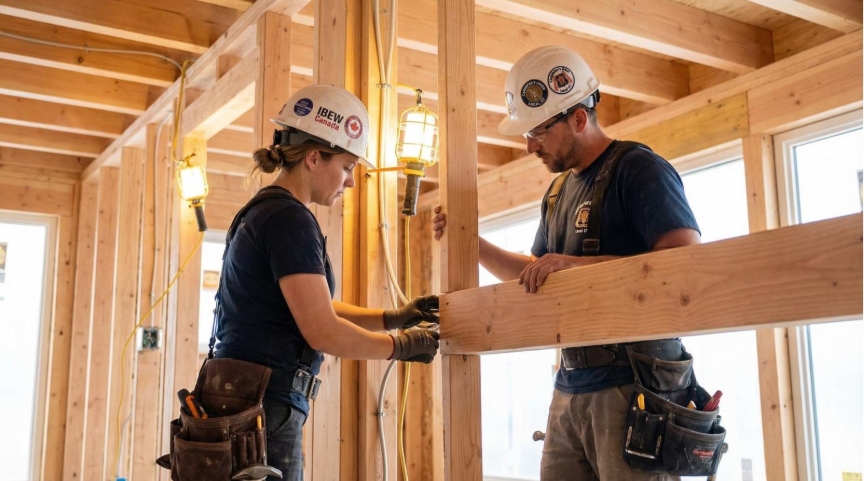
Canada’s construction industry is projected to need more than 299,000 new workers by 2033 to replace retiring tradespeople and meet growing demand, according to BuildForce Canada. The residential sector alone – already straining under the weight of a widely acknowledged housing crisis – faces some of the tightest labour markets in a generation. Electricians, plumbers, ironworkers, carpenters, concrete finishers, and heavy equipment operators are in short supply from Vancouver Island to Halifax.
The consequences are measurable. Labour costs now account for an increasingly disproportionate share of total project budgets. Construction timelines that once ran 24 to 36 months for a mid-rise residential tower in the Greater Toronto Area are stretching to 40 months or beyond. And subcontractor competition for available tradespeople – particularly on high-density urban projects – has become intense enough to affect project viability.
“We’re seeing it in every project we undertake,” says Hosseinzadeh Sadeghi. “The bids come in higher, the scheduling buffers need to be wider, and managing labour continuity has become as important as managing materials procurement. It changes the entire financial model of a development.”
A Generational Shift in the Workforce
The roots of the crisis are demographic. Canada – like much of the developed world – saw decades of cultural messaging that steered young people toward university degrees and white-collar careers, often at the expense of skilled trades. Enrolment in apprenticeship programs declined through the 1990s and 2000s, and the workforce that entered the trades during the last major construction boom is now aging toward retirement.
According to Statistics Canada, more than one in five construction workers in Canada is over the age of 55. As that cohort exits the workforce over the next decade, the industry faces a structural gap that cannot be closed quickly, because trades training takes time. A licensed electrician, plumber, or millwright requires years of apprenticeship. There are no shortcuts.
“Governments have been talking about trades promotion for years, but the urgency hasn’t matched the rhetoric,” says Hosseinzadeh Sadeghi. “We’re still not doing enough at the high school level to show young Canadians that a career in the skilled trades is a path to genuine prosperity – financially rewarding, professionally satisfying, and deeply necessary.”
Immigration: A Partial but Complex Solution
Federal immigration policy has attempted to address the gap through targeted streams for skilled trades workers, and Hosseinzadeh Sadeghi is broadly supportive. However, she cautions that immigration alone cannot close the shortage – and that bringing in trained workers from abroad comes with its own friction. Foreign credential recognition remains a persistent barrier. A licensed electrician trained in Brazil, the Philippines, or India may spend months or years navigating provincial licensing processes before they can work in their trade in Canada.
“Credential recognition reform is something governments at both the federal and provincial level need to prioritize,” says Hosseinzadeh Sadeghi. “We’re leaving skilled people on the sidelines while construction sites sit shorthanded. That’s a policy failure with real consequences for housing costs and housing supply.”

Technology as a Partial Offset
In the near term, some developers are turning to technology and innovation to offset labour constraints. Modular and panelized construction systems, which allow more building components to be fabricated off-site under controlled conditions, can reduce the on-site labour hours required per unit. Digital tools – Building Information Modelling (BIM), drone surveys, and AI-assisted project scheduling – help teams work more efficiently and reduce costly mistakes.
“Technology can help us do more with the workers we have,” says Hosseinzadeh Sadeghi. “But it doesn’t replace the need for skilled hands on the job site. If anything, new technologies often require a higher level of expertise, not less.”
Sky Property Group has been exploring prefabrication partnerships and is actively evaluating how off-site construction methodologies can be integrated into future project designs – not as a magic solution, but as a way to optimize performance in a constrained labour environment.
The Policy Imperative
Resolving Canada’s construction labour shortage will require a multi-pronged policy response: expanded and better-funded apprenticeship programs, genuine credential recognition reform, sustained trades promotion in secondary schools, and targeted immigration pathways that reduce delays for qualified foreign-trained workers. Some provinces have made meaningful moves. Ontario’s Skilled Trades Strategy has invested in awareness campaigns and streamlined some pathways to certification. But Hosseinzadeh Sadeghi believes more is needed – and faster.
“Every month we spend not building the pipeline of future tradespeople is a month added to Canada’s housing shortage a decade from now,” she says. “The decisions governments make today about trades training and workforce development will determine whether Canada can actually build its way out of this housing crisis or just keep talking about it.”

Looking Ahead
For developers like Sky Property Group, the labour shortage has forced a more disciplined approach to project planning – longer lead times, deeper subcontractor relationships, and earlier engagement with trades partners to secure commitments before shovels go in the ground. It has also reinforced the importance of strong project management and operational efficiency.
“Real estate development is ultimately about building communities,” says Hosseinzadeh Sadeghi. “And communities need homes. Homes need builders. If we don’t fix the skilled trades pipeline in Canada – and fix it seriously – we’re going to keep falling further behind. That’s not acceptable.”
About Ladan Hosseinzadeh Sadeghi
Ladan Hosseinzadeh Sadeghi is President & CEO of Sky Property Group Inc., a Canadian real estate development company focused on high-density residential development in the Greater Toronto Area. She is recognized as a leading voice on housing policy, urban development, and real estate investment in Canada.
Media Contact:
Ladan Hosseinzadeh Sadeghi
ladanhosseinzadehsadeghi@gmail.com
SOURCE: Sky Property Group Inc.
View the original press release on ACCESS Newswire